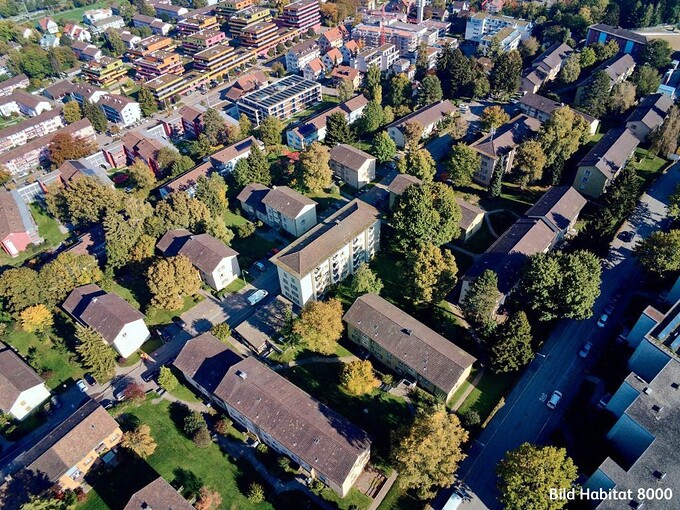
Optimising urban density: Preservation vs. new construction
Life cycle assessments as part of the test planning for the Bergacker site
Since 2016, Habitat 8000 AG has been developing its Bergacker site in Zurich Affoltern with the aim of increasing density to maximise land use while offering as much affordable housing as possible. The existing complex, built in the 1950s, is structurally sound and popular with current residents but remains underutilised. Following a feasibility study in 2019 that focused on replacement, the preservation of the existing buildings was thoroughly reconsidered in 2022. Ultimately, Habitat 8000 opted for a new construction.
Durable supported the entire process with comparative environmental impact assessments of greenhouse gas emissions. A key finding from these assessments was that extending the existing structures offered rather minor potential savings in terms of embodied carbon emissions.
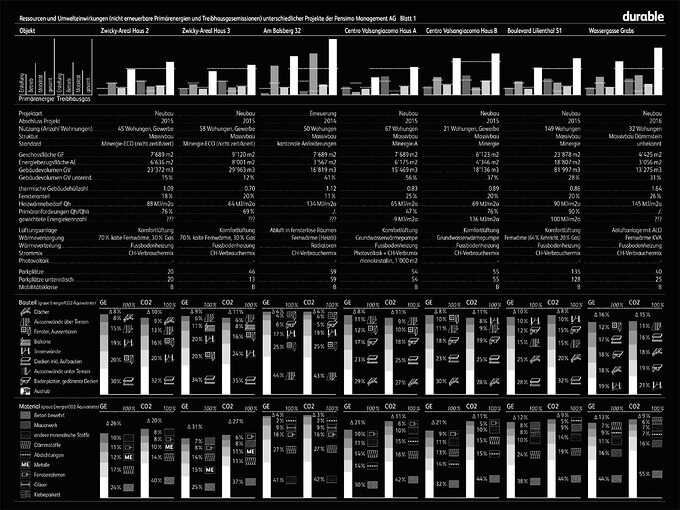
Learning for resource-efficient construction
Life cycle assessments for benchmarking one's own portfolio
Pensimo Management AG has traditionally developed its real estate portfolios with a strong focus on sustainability. For over ten years, Durable has conducted life cycle assessments to support these efforts. A key objective of Pensimo’s sustainability strategy is the reduction of embodied carbon emissions.
To move closer to net-zero embodied emissions, Pensimo and Durable have jointly developed a guide that outlines emissions targets for various construction tasks, such as new builds, replacements, and renewals, and describes measures for achieving them. This guide is currently being tested in selection processes.
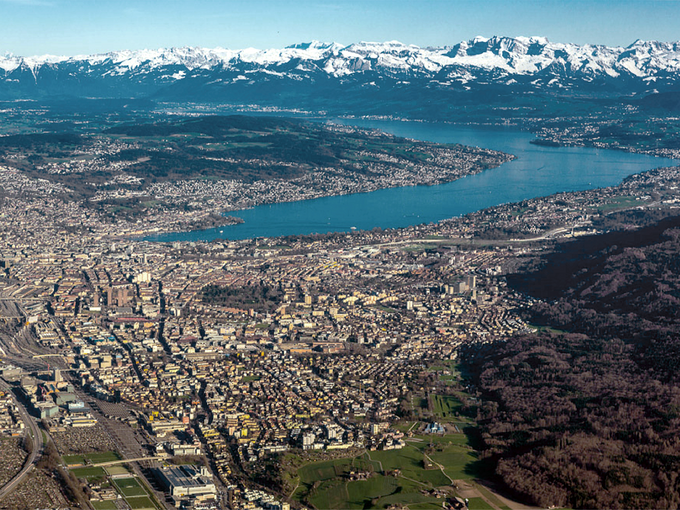
Ökobilanzen mit erweitertem räumlichen Fokus
Vergleichende Ökobilanzen als Teil des Variantenstudiums vor Planungsbeginn
Die Swiss Prime Site Solutions AG entwickelt Liegenschaften nach hochstehenden Nachhaltigkeitszielen. Ein Schwerpunkt ist Netto-Null. Dabei betrachtet sie nicht nur alle drei Scopes einschliesslich der grauen Treibhausgasemissionen, sondern auch einen erweiterten räumlichen Fokus.
Gemeinsam mit Durable hat SPSS eine Methode entwickelt, die die Binnenwanderung von Personen berücksichtigt, die durch eine unterlassene baurechtliche Vollausnützung einer Liegenschaft entsteht. Dabei wurden die folgenden Fragen untersucht: In welche Liegenschaften weichen diese Personen aus? Welche ökologische Qualität haben die Liegenschaften? Welche Auswirkungen haben diese Faktoren auf den ökologischen Fussabdruck?